

2026 Michigan Homeowner’s Guide
How Much Does a New HVAC System Cost in Michigan?
Everything Michigan homeowners need to know about HVAC replacement costs, furnace installation, air conditioning replacement, heat pumps, financing, and choosing the right HVAC contractor in 2026.
Replacing Your HVAC System Is One of the Biggest Investments You’ll Make in Your Home
Whether your furnace has stopped keeping your home warm during a Michigan winter or your air conditioner is struggling to keep up with summer heat, replacing your HVAC system is a major decision. Most homeowners only purchase a new heating and cooling system once or twice during the time they own their home.
One of the first questions homeowners ask I & J Heating & Cooling is: “How much should a new HVAC system actually cost?”
The answer depends on much more than square footage. Equipment size, efficiency, ductwork, electrical requirements, system type, installation complexity, and the condition of the existing HVAC system all influence the final investment.
This 2026 guide was created to give Michigan homeowners a practical understanding of HVAC replacement pricing so they can compare options confidently and avoid making a rushed decision when their current system fails.

2026 Michigan HVAC Cost Snapshot
These are useful planning ranges—not fixed quotes. Your home’s actual needs should be evaluated before equipment is selected.
| System | Typical Installed Cost | Typical Lifespan |
|---|---|---|
| Central Air Conditioner | $4,500–$9,000+ | 15–20 Years |
| Gas Furnace | $4,000–$8,500+ | 15–20 Years |
| Furnace + Central AC | $8,000–$16,000+ | 15–20 Years |
| Heat Pump System | $8,000–$18,000+ | 15–20 Years |
| Ductless Mini-Split | $4,000–$15,000+ | 15–20 Years |
Actual pricing depends on equipment capacity, efficiency level, installation conditions, ductwork, permits, electrical work, accessories, and other project-specific requirements.
What Is Included in a Complete HVAC System?
A complete heating and cooling system contains multiple components working together. Understanding those components makes it easier to understand why one HVAC replacement quote may look significantly different from another.
Gas Furnace
The furnace provides heat during Michigan’s colder months. Modern systems may include high-efficiency heat exchangers, ECM or variable-speed blower motors, electronic ignition, advanced controls, and improved safety systems.
Central Air Conditioner
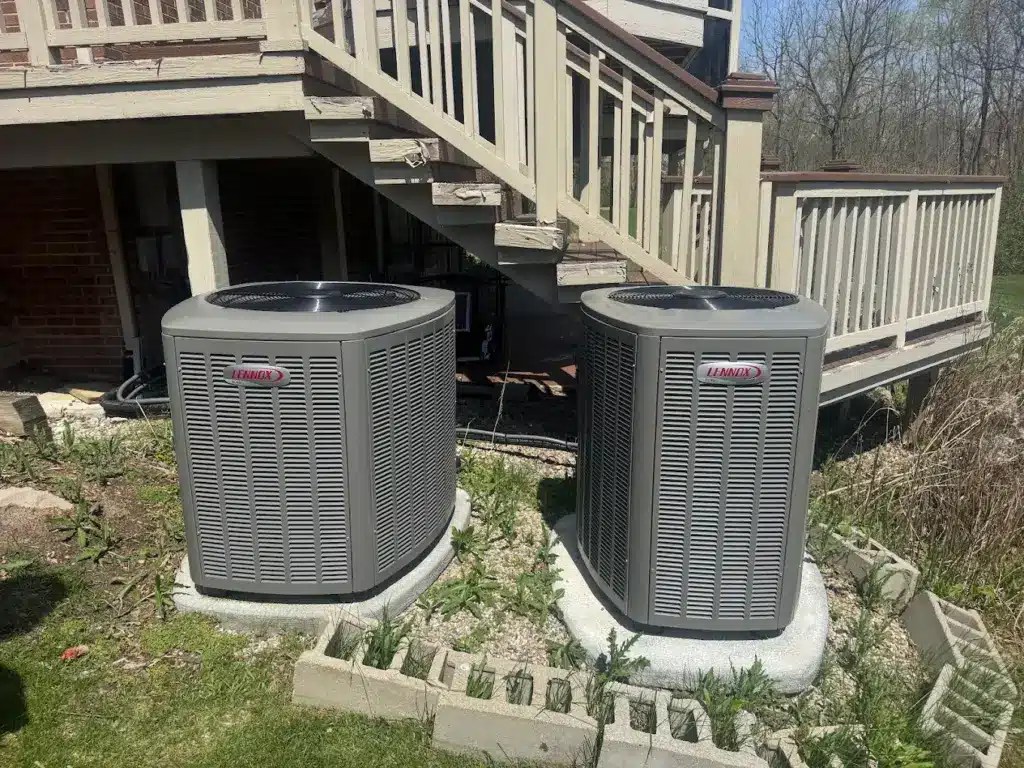
Central air conditioning typically includes an outdoor condenser and compressor paired with an indoor evaporator coil. The system removes both heat and moisture from indoor air.
Thermostat & Controls
Modern thermostats can improve scheduling, comfort, monitoring, and efficiency. Some higher-end HVAC systems require communicating controls specifically designed for the equipment.

Don’t Forget About the Ductwork
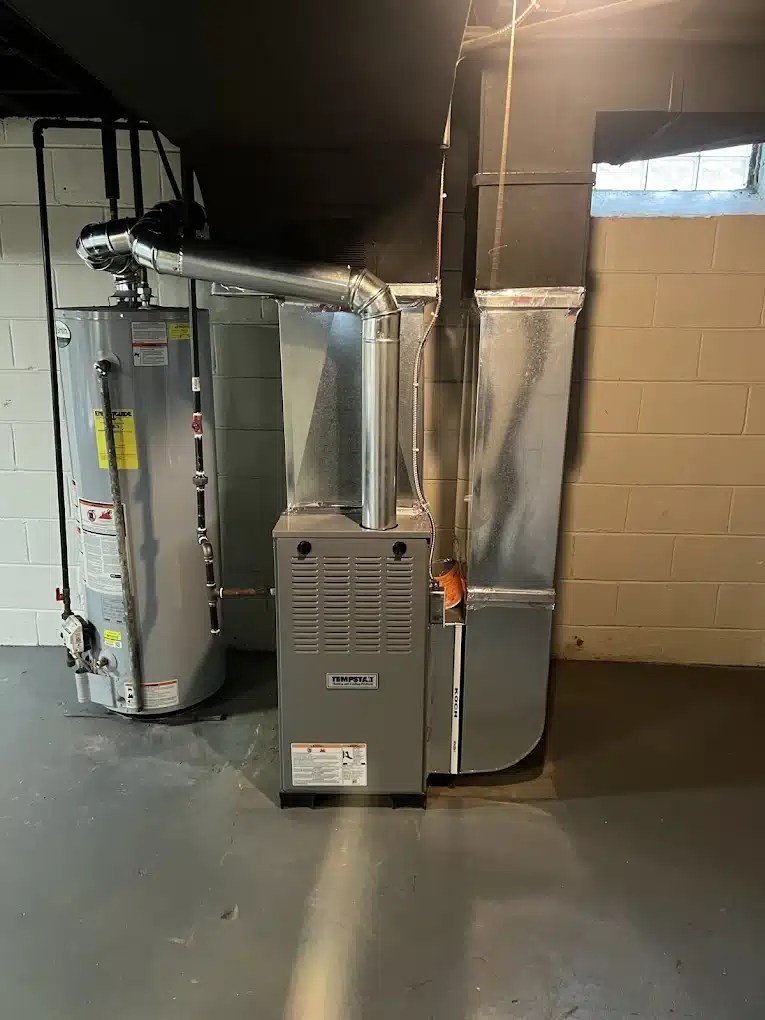
Your duct system determines how effectively conditioned air reaches each room. Even an expensive new HVAC system can struggle if the ductwork leaks, restricts airflow, or was improperly designed.
Depending on the home, installation may involve duct sealing, return-air improvements, transitions, supply modifications, balancing, or replacement of damaged sections. These improvements can increase the initial project cost but may significantly improve comfort and system performance.
How Much Does HVAC Cost Based on Home Size?
Square footage is one of the factors that influences HVAC capacity, but it should never be used by itself to select equipment. Insulation, windows, ceiling height, orientation, occupancy, air leakage, ductwork, and the home’s construction all influence its heating and cooling load.
| Approximate Home Size | Possible Cooling Range | General Complete-System Planning Range |
|---|---|---|
| 1,000 sq. ft. | 1.5–2 Tons | $7,500–$11,000+ |
| 1,500 sq. ft. | 2–2.5 Tons | $8,000–$12,500+ |
| 2,000 sq. ft. | 2.5–3.5 Tons | $9,000–$14,500+ |
| 2,500 sq. ft. | 3–4 Tons | $10,000–$16,500+ |
| 3,000+ sq. ft. | Varies Significantly | $12,000–$20,000+ |
A 2,000-square-foot home does not automatically need a 3-ton air conditioner. Proper HVAC sizing should account for the actual heating and cooling requirements of the home rather than relying on square footage alone.
Equipment Efficiency Has a Major Impact on Price
Higher-efficiency HVAC equipment generally costs more upfront because it incorporates more advanced components and controls. Depending on the equipment you compare, you’ll see ratings such as SEER2, AFUE, and HSPF2.
A higher rating usually indicates better energy performance, but that does not automatically mean the most expensive system is the best investment for every homeowner. Your budget, expected years in the home, energy usage, comfort preferences, and existing duct system should all influence the decision.

Why Can Two HVAC Quotes Differ by Thousands of Dollars?
It is completely normal to receive HVAC replacement quotes that differ by several thousand dollars. What appears to be the “same furnace and AC” may actually represent two very different installations.
Equipment
Efficiency level, compressor technology, blower design, controls, warranties, and equipment capacity all influence pricing.
Installation Scope
One proposal may include duct modifications, electrical upgrades, permits, new line sets, controls, and commissioning while another does not.
Workmanship
Correct refrigerant charging, airflow setup, equipment commissioning, and overall installation quality directly affect long-term reliability.
Don’t Compare HVAC Estimates by Price Alone
Compare equipment model numbers, efficiency ratings, warranties, installation scope, ductwork modifications, permit requirements, and what happens after the system is installed. The least expensive quote is not necessarily the lowest-cost option over the life of the equipment.

Should You Repair or Replace Your HVAC System?
Replacement is not automatically the answer every time an HVAC system breaks down. A relatively young system with a minor repair may have many years of useful service remaining.
Replacement deserves stronger consideration when the equipment is approaching 15–20 years old, major repairs are becoming frequent, efficiency has declined, comfort problems continue, or an expensive repair represents a substantial percentage of the cost of new equipment.
What Is the $5,000 Rule for HVAC?
The “$5,000 rule” is a simple repair-versus-replacement guideline sometimes used by homeowners. Multiply the age of your HVAC equipment by the estimated repair cost.
Equipment Age × Repair Cost
For example, if your 15-year-old furnace needs a $450 repair:
15 × $450 = $6,750
Because the result is greater than $5,000, replacement may deserve consideration. However, this is only a rule of thumb. The condition of the equipment, type of repair, maintenance history, warranty status, energy use, and homeowner’s plans should all be considered.
Which HVAC System Is Best for Michigan Homes?
Michigan homeowners need systems capable of handling two very different extremes: humid summer heat and sustained freezing temperatures during winter. There isn’t one universal “best” system, but several configurations work particularly well in our climate.
Gas Furnace + Central Air Conditioning
This remains a popular solution throughout Southeast Michigan. Natural-gas furnaces provide strong cold-weather heating performance while central air conditioning handles summer cooling and humidity.
Cold-Climate Heat Pump
Modern cold-climate heat pumps can provide both heating and cooling and have improved considerably in low-temperature performance. The best configuration depends on the home, existing utilities, operating costs, and comfort expectations.
Dual-Fuel System
A dual-fuel configuration combines a heat pump with a gas furnace. The heat pump can handle efficient heating during moderate conditions while the furnace takes over when additional heating capacity is needed.
Ductless Mini-Split
Ductless systems can be a strong solution for additions, finished garages, older homes without ductwork, individual rooms, or spaces that are difficult to heat and cool using the existing central system.
Choosing an HVAC Brand
Homeowners frequently search for the “best HVAC brand,” but installation quality can be just as important as the equipment manufacturer. Carrier, Bryant, Trane, Lennox, Rheem, Goodman, Amana, and American Standard are among the manufacturers homeowners commonly compare.
Rather than focusing only on the logo, compare the specific equipment model, efficiency level, available features, warranty coverage, parts support, installation requirements, and the contractor who will stand behind the system.
A properly sized and professionally commissioned mid-range system may provide substantially better long-term performance than premium equipment installed incorrectly.
Can a New HVAC System Lower Your Energy Bills?
Replacing older equipment can reduce energy consumption, particularly when the existing furnace or air conditioner is inefficient, oversized, poorly maintained, or nearing the end of its service life.
Modern equipment may also provide variable-speed operation, staged heating or cooling, improved blower efficiency, better humidity management, and smarter control strategies. Those improvements can help the system maintain comfort without constantly running at maximum capacity.
The amount you save depends on your existing equipment, utility rates, home efficiency, thermostat settings, climate, and the replacement system selected. Energy savings should be considered alongside comfort, reliability, maintenance costs, and equipment lifespan.
HVAC Financing & Budget Planning
HVAC replacement often comes at an inconvenient time. Financing can allow homeowners to replace failing equipment without delaying necessary work or draining emergency savings.
Before selecting financing, compare the interest rate, term, monthly payment, total financed cost, promotional conditions, and whether early payoff is allowed without penalty. A lower monthly payment does not necessarily mean the lowest total cost.
When available, financing can also make it possible to choose equipment based on long-term comfort and efficiency rather than selecting the least expensive system solely because of the upfront cost.
Michigan HVAC Rebates & Incentives in 2026
Michigan homeowners may have access to certain state, utility, or energy-efficiency rebate programs depending on the equipment being installed, household eligibility, project requirements, and current funding.
The former federal Energy Efficient Home Improvement Credit under Section 25C no longer applies to qualifying HVAC equipment placed in service after December 31, 2025. However, Michigan programs and participating utility incentives may still reduce the cost of qualifying improvements.
Because program rules and funding can change, homeowners should verify eligibility before purchasing equipment rather than assuming a system will qualify for a specific rebate.
How to Choose a Good HVAC Company
Choosing the contractor is one of the most important decisions in the replacement process. The equipment itself is only part of what you’re purchasing—the quality of the installation will directly affect comfort, efficiency, reliability, and potentially the lifespan of the system.
- Ask how equipment sizing is determined.
- Confirm the company is properly licensed and insured where applicable.
- Compare exact equipment model numbers.
- Ask whether permits and inspections are included.
- Review labor and manufacturer warranties.
- Ask whether ductwork and airflow will be evaluated.
- Understand what happens if the system needs warranty service later.


HVAC Replacement in White Lake & Oakland County
I & J Heating & Cooling helps homeowners throughout White Lake, Waterford, Commerce Township, Milford, Highland, West Bloomfield, Wixom, Walled Lake, Clarkston, Novi, and surrounding Oakland County communities evaluate their heating and cooling options.
Whether you’re replacing an aging furnace, upgrading an air conditioner, considering a heat pump, or planning a complete HVAC system replacement, our goal is to help you understand your choices and select equipment that fits your home, comfort needs, and budget.
Frequently Asked Questions About New HVAC Systems
How much does a new HVAC system cost in Michigan?
A complete furnace and central air conditioning replacement commonly falls around $8,000 to $16,000 or more depending on equipment capacity, efficiency, ductwork, labor, electrical requirements, and installation complexity.
How much does HVAC cost for a 2,000-square-foot house?
A 2,000-square-foot Michigan home may fall around the $9,000 to $14,500+ range for a complete system in many situations, but square footage by itself cannot determine proper system size or final price.
How long does an HVAC system usually last?
Many furnaces and central air conditioners provide approximately 15 to 20 years of service when properly sized, installed, and maintained.
Is it worth fixing a 20-year-old AC unit?
A minor repair can still make sense, but expensive repairs on a 20-year-old air conditioner should be compared with replacement based on reliability, efficiency, repair history, parts availability, and total cost.
Should I replace my furnace and AC at the same time?
Replacing both systems together can make sense when they are similar in age, the indoor and outdoor equipment need to be properly matched, or both systems are approaching the end of their expected lifespan.
What is the best month to buy a new HVAC system?
Spring and fall can be convenient times to plan replacement because demand may be lower than during extreme weather. More importantly, planning before a system fails gives you time to compare options instead of making an emergency decision.
Is financing available for HVAC replacement?
HVAC financing is commonly available for qualified homeowners. Terms, rates, promotional periods, and payment options vary, so compare the total financing cost rather than focusing only on the monthly payment.
Are HVAC tax credits available in 2026?
The former federal Section 25C Energy Efficient Home Improvement Credit does not apply to qualifying equipment placed in service after December 31, 2025. Michigan homeowners may still have access to qualifying state, utility, or energy rebate programs depending on eligibility and current availability.
Get an HVAC Replacement Estimate from I & J Heating & Cooling
If your furnace or air conditioner is aging, inefficient, or requiring frequent repairs, you don’t have to guess what replacement will cost. Our team can evaluate your current system, discuss your comfort goals, and recommend options for your home and budget.