
2026 Michigan HVAC Pricing Guide
HVAC Replacement Cost for a 2,000 Square Foot House
Replacing your home’s HVAC system is one of the largest investments many homeowners make. Whether your furnace has reached the end of its life, your air conditioner is no longer keeping up with Michigan summers, or you’re upgrading to improve energy efficiency, understanding replacement costs helps you make an informed decision. For a typical 2,000 square foot home in Michigan, replacing an HVAC system generally ranges from $8,500 to $18,000+ depending on the equipment selected, installation complexity, ductwork condition, efficiency ratings, electrical upgrades, and available rebates. This guide explains exactly what influences HVAC replacement pricing, how different system types compare, what homeowners should budget for in 2026, and how to determine which system offers the best long-term value.
Table of Contents
- Average HVAC Replacement Cost
- Average Cost for a 2,000 Sq Ft House
- What Affects HVAC Pricing?
- Furnace & Air Conditioner Costs
- Heat Pump Systems
- Ductwork Costs
- High-Efficiency Equipment
- Michigan Energy Rebates
- Federal Tax Credits
- Financing Options
- Repair vs Replace
- Frequently Asked Questions
Average HVAC Cost
How Much Does It Cost to Replace an HVAC System in a 2,000 Square Foot Home?
For most Michigan homeowners, replacing both the furnace and central air conditioner at the same time provides the greatest long-term value. Installing both systems together often reduces labor costs, ensures equipment compatibility, improves efficiency, and minimizes future service interruptions. Although every home is different, homeowners with approximately 2,000 square feet can generally expect complete HVAC replacement costs to fall between $8,500 and $18,000+. Premium systems with advanced variable-speed technology, zoning, ductwork modifications, indoor air quality upgrades, or heat pump installations can exceed this range. The actual investment depends on much more than the size of the home. Insulation levels, ceiling height, window efficiency, duct design, equipment accessibility, electrical requirements, fuel source, and desired comfort features all influence the final project cost. Choosing equipment based solely on square footage often leads to oversized or undersized systems. Proper load calculations remain one of the most important steps in selecting a replacement HVAC system.
Estimated Michigan Pricing
Typical HVAC Replacement Cost Ranges
| System Type | Typical Installed Cost |
|---|---|
| Furnace Only | $4,500 – $8,500 |
| Central AC Only | $4,500 – $8,000 |
| Furnace + AC Replacement | $8,500 – $18,000+ |
| High Efficiency HVAC System | $12,000 – $20,000+ |
| Heat Pump System | $10,000 – $22,000+ |
These ranges reflect complete professional installation for many Michigan homes and can vary based on equipment selection, home characteristics, installation requirements, efficiency goals, and available rebates.
What Determines Cost?
The Biggest Factors That Affect HVAC Replacement Pricing
Many homeowners assume the equipment itself represents the majority of the project cost. In reality, proper installation plays an equally important role in system performance, efficiency, reliability, and long-term operating costs. Some of the largest factors influencing HVAC replacement pricing include:
- Home size and layout
- Heating and cooling load calculations
- Existing ductwork condition
- Energy efficiency ratings (SEER2 & AFUE)
- Equipment brand and technology
- Variable-speed vs single-stage systems
- Electrical upgrades
- Thermostat replacement
- Indoor air quality upgrades
- Permit requirements
- Installation complexity
- Available rebates and tax credits
Rather than selecting equipment based strictly on price, homeowners should consider the total cost of ownership, including utility savings, expected lifespan, maintenance requirements, warranty coverage, and overall comfort improvements.
Furnace Replacement
How Much Does It Cost to Replace a Furnace in a 2,000 Square Foot House?
The furnace is the heart of your home’s heating system during Michigan’s long winters. When a furnace reaches the end of its useful life, homeowners often notice higher utility bills, uneven heating, frequent repairs, strange noises, or difficulty maintaining comfortable indoor temperatures. For many homes around 2,000 square feet, replacing a natural gas furnace generally ranges from $4,500 to $8,500+. Higher-efficiency furnaces, variable-speed blower motors, communicating equipment, upgraded filtration systems, and installation complexity can increase the total investment. Modern furnaces are considerably more efficient than systems installed fifteen or twenty years ago. While older furnaces commonly operated at 80% AFUE efficiency, today’s premium equipment can exceed 96–98% AFUE, converting significantly more fuel into usable heat instead of allowing energy to escape through the venting system. For homeowners planning to remain in their home for many years, investing in a higher-efficiency furnace may help reduce annual heating costs while providing quieter operation and improved indoor comfort.

Central Air Conditioning
How Much Does a New Air Conditioner Cost?
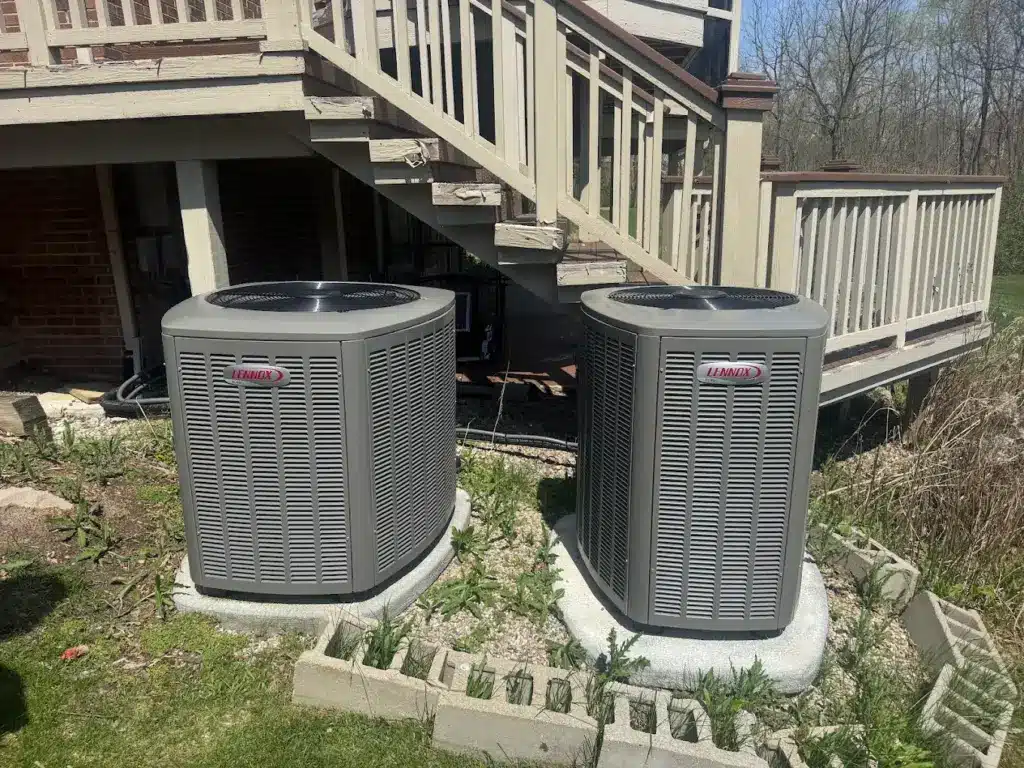
Central air conditioning systems vary considerably in price depending on cooling capacity, efficiency, compressor technology, and installation requirements. For many Michigan homeowners, replacing a central air conditioner generally ranges between $4,500 and $8,000+. Premium variable-speed systems, communicating controls, larger tonnage, or significant installation modifications may increase the overall investment. Replacing both the furnace and air conditioner simultaneously is often recommended when both systems are approaching the end of their expected lifespan. Installing matched equipment helps maximize efficiency while ensuring both systems are designed to work together. Many homeowners are surprised to learn that installing only one component while keeping an older companion unit can reduce overall system efficiency and occasionally limit manufacturer warranty coverage.
Heat Pumps
Heat Pump Replacement Costs
Heat pumps continue to grow in popularity across Michigan because they provide both heating and cooling from a single system. They also qualify for various rebates and tax incentives depending on the equipment installed. A complete residential heat pump replacement commonly ranges from $10,000 to $22,000+ depending on system capacity, efficiency, backup heat requirements, electrical upgrades, and installation complexity. Modern cold-climate heat pumps have improved dramatically over the last decade and can provide reliable heating even during many Michigan winter conditions.
Equipment Efficiency
How Efficiency Ratings Affect HVAC Replacement Costs
Higher-efficiency HVAC equipment generally costs more upfront but may reduce long-term operating expenses through lower utility bills. Today’s equipment is measured using several efficiency ratings, including AFUE for furnaces and SEER2 for air conditioners. Understanding these ratings helps homeowners compare systems based not only on purchase price but also expected operating costs over the next 15–20 years.
| Efficiency | Typical Use |
|---|---|
| 80% AFUE | Standard Furnace |
| 96–98% AFUE | High Efficiency Furnace |
| 14–16 SEER2 | Standard AC |
| 17–21+ SEER2 | High Efficiency AC |
Choosing higher-efficiency equipment should be evaluated alongside your expected length of home ownership, annual energy usage, available rebates, and overall installation budget.
Sizing Matters
Does Every 2,000 Square Foot Home Need the Same HVAC System?
Absolutely not. One of the biggest misconceptions in residential HVAC is that home size alone determines equipment size. While square footage provides a useful starting point, professional contractors evaluate much more before recommending replacement equipment. A properly sized HVAC system should be based on a complete load calculation that considers insulation levels, ceiling heights, window size and orientation, number of occupants, air leakage, duct design, sun exposure, and local Michigan climate conditions. Installing equipment that is too large can cause short cycling, uneven temperatures, excess humidity, and premature wear. Equipment that is too small may struggle to keep up during extreme summer heat or winter cold. Proper sizing helps maximize comfort, improve efficiency, reduce energy costs, and extend equipment life.
Installation Factors
What Can Increase the Cost of an HVAC Replacement?
While the HVAC equipment itself represents a significant portion of the investment, installation requirements often have an equally large impact on the final project cost. Every home is unique, and replacing a system in one 2,000 square foot house may require considerably more labor or additional materials than another home of the same size. Older homes throughout White Lake and Oakland County frequently require updates that were never part of the original HVAC installation. These improvements help the new equipment operate safely, efficiently, and according to current building codes.
- Electrical upgrades
- New disconnect boxes
- Refrigerant line replacement
- Drain line modifications
- Thermostat upgrades
- Equipment pad replacement
- Duct sealing
- Duct modifications
- Permits and inspections
- Airflow balancing
- Filter cabinet upgrades
- Indoor air quality accessories
Although these improvements may increase the initial installation cost, they often improve reliability, efficiency, comfort, and long-term system performance.
Potential Additional Costs
- Duct repairs
- Electrical improvements
- Thermostat replacement
- Condensate drain upgrades
- Equipment relocation
- Indoor air quality products
- Humidifiers
- Air cleaners
- UV lights
Ductwork
Do You Need New Ductwork During HVAC Replacement?
Many homeowners ask whether ductwork must be replaced when installing a new HVAC system. The answer depends entirely on the condition of the existing ducts. Well-designed ductwork that is properly sealed, insulated, and sized may continue serving a new HVAC system for many years. However, damaged or poorly designed duct systems can significantly reduce efficiency and comfort regardless of how efficient the new equipment may be. Common ductwork issues include:
- Air leaks
- Poor insulation
- Undersized ducts
- Improper airflow
- Disconnected duct sections
- Restricted return air
- Collapsed flexible ducts
- Poor room balancing
Correcting these issues during installation can improve airflow, reduce energy consumption, eliminate hot and cold rooms, and allow the new equipment to operate closer to its designed efficiency.
Federal Incentives
Federal Tax Credits Can Lower Your Replacement Cost
One of the biggest advantages of replacing an older HVAC system is that many high-efficiency systems may qualify for federal tax incentives. These incentives can reduce the overall cost of upgrading while encouraging homeowners to install more energy-efficient equipment. Eligibility depends on the equipment selected and current federal program requirements. Because incentive programs can change, homeowners should verify current qualifications before purchasing a new system.

Financing
Financing Can Make HVAC Replacement More Affordable
Replacing an HVAC system unexpectedly can create financial stress, especially if your furnace fails during winter or your air conditioner stops working during a Michigan heat wave. Many homeowners choose financing because it allows them to install the equipment they actually need instead of settling for a lower-efficiency system simply to reduce upfront costs. Financing can also make it easier to include indoor air quality improvements, thermostat upgrades, or higher-efficiency equipment that may reduce monthly utility expenses over the life of the system.
Repair or Replace?
Should You Replace Your HVAC System or Repair It?
Not every HVAC repair means replacement is necessary. If your equipment has been dependable and requires only a relatively minor repair, continuing to maintain it may provide the best value. However, replacement often becomes worth considering when:
- Your system is 15–20+ years old.
- Repair costs continue increasing.
- Utility bills have risen noticeably.
- Your home has uneven temperatures.
- The equipment struggles during extreme weather.
- Major components have failed.
- Replacement parts have become difficult to obtain.
- You plan to stay in the home for many years.
Rather than focusing only on today’s repair bill, homeowners should consider long-term reliability, energy savings, comfort improvements, and future maintenance costs when making this decision.
Frequently Asked Questions
HVAC Replacement Cost FAQs
Below are answers to some of the most common questions homeowners ask when planning an HVAC replacement for a 2,000 square foot home in Michigan.
How much should it cost to replace an HVAC system in a 2,000 square foot house?
Most Michigan homeowners can expect to invest between $8,500 and $18,000+ for a complete furnace and central air conditioning replacement. The final cost depends on equipment efficiency, installation complexity, ductwork, electrical upgrades, and optional comfort improvements.
Does square footage determine HVAC size?
No. Square footage is only one factor. Proper equipment sizing should include a Manual J load calculation that evaluates insulation, windows, ceiling height, occupancy, air leakage, orientation, and Michigan’s climate.
Should I replace my furnace and AC at the same time?
If both systems are approaching the end of their expected service life, replacing them together often provides better efficiency, equipment compatibility, and installation value while minimizing future labor costs.
How long does HVAC equipment usually last?
Most residential HVAC systems last approximately 15–20 years with proper installation and regular maintenance. Actual lifespan depends on equipment quality, maintenance history, usage, and environmental conditions.
Can I finance a new HVAC system?
Many homeowners finance HVAC replacement to spread the investment over time while installing equipment that better fits their long-term comfort and energy-efficiency goals.
Do high-efficiency HVAC systems save money?
Higher-efficiency equipment generally costs more initially but may reduce monthly utility expenses and improve comfort over the life of the system. Actual savings depend on equipment selection, installation quality, and home characteristics.
Can I qualify for tax credits or rebates?
Many qualifying high-efficiency HVAC systems may be eligible for federal tax incentives or utility rebates. Eligibility varies based on the equipment installed and current program requirements.
Continue Your Research
Related HVAC Resources
Explore more resources from I & J Heating & Cooling to help you make informed decisions about your home’s comfort system.
AC Repair
Learn how to identify common cooling problems, understand repair options, and know when replacement may be the better investment.
HVAC Installation
Compare today’s heating and cooling systems, efficiency ratings, and installation options available for Michigan homes.
Preventative Maintenance
Routine maintenance helps improve efficiency, extend equipment life, and reduce unexpected breakdowns.
Local HVAC Experts
Request an HVAC Replacement Estimate in White Lake, MI
Whether you’re replacing an aging furnace, installing a new central air conditioner, upgrading to a high-efficiency heat pump, or planning a complete HVAC system replacement, I & J Heating & Cooling provides professional installation throughout White Lake and surrounding Oakland County communities. Our team will evaluate your home’s heating and cooling needs, explain available equipment options, and provide recommendations based on efficiency, comfort, and long-term value.